
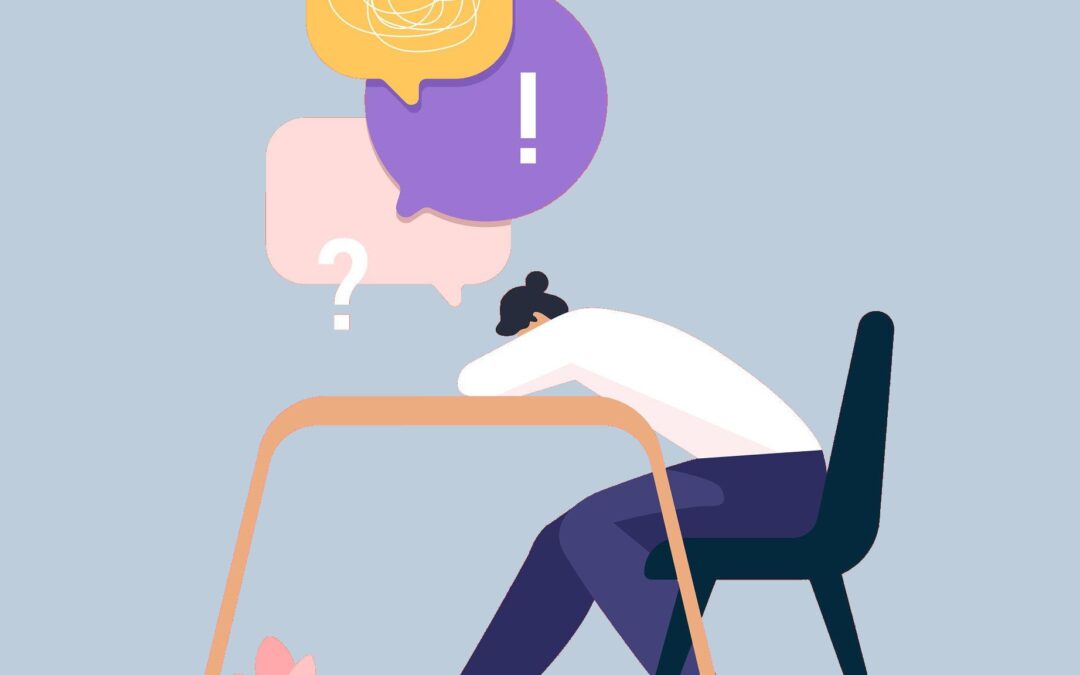
Someone in your life has probably said it to you.
Maybe not in those exact words. Maybe it was more like “you just need to move on” or “stop letting this hold you back” or the classic “other people have it worse.”
Or maybe you’ve said it to yourself, usually at 1am, when the self-compassion has run out and frustration has taken over.
Just. Get. It. Together.
Here’s the thing: the instinct behind that advice isn’t wrong. You do want to move forward. You do want to stop feeling stuck. You genuinely want to get it together.
The advice just skips the part that actually makes that possible.
Why “Just Move On” Doesn’t Work
If you could simply decide to get it together and move on, you would have done it already. The fact that you haven’t isn’t a character flaw. It’s not laziness or weakness or a lack of willpower.
It’s because moving forward isn’t a decision. It’s a process.
When we’re stuck, really stuck, there’s usually something underneath it. A fear that hasn’t been acknowledged. A loss that hasn’t been grieved. A belief about ourselves that’s quietly running the show. A part of us that’s holding on for reasons that made sense at some point, even if they don’t anymore.
Telling yourself to just move on doesn’t address any of that. It just adds shame to the pile.
And shame, it turns out, is terrible fuel for actual change.
So What Does Actually Work?
Here’s where the “get it together” instinct gets useful, if you redirect it slightly.
Instead of get your act together, try get curious about what’s keeping you here.
Not in a self-indulgent, spiral-forever way. In a genuinely investigative way. Like a kind, slightly nosy friend who’s actually trying to help.
Ask yourself: what am I actually afraid would happen if I moved forward? What am I holding onto, and why? What would “moving on” actually require me to let go of?
Sometimes just asking those questions out loud, or writing them down, starts to loosen something. Because what’s keeping you stuck usually isn’t weakness. It’s something that deserves to be understood before it can be released.
The Part That Needs to Move On Might Not Feel Safe Yet
This is the part that well-meaning tough love completely misses.
Sometimes we stay stuck not because we don’t want to move forward, but because some part of us doesn’t feel safe doing it yet. Maybe moving on means accepting something painful. Maybe it means stepping into uncertainty. Maybe it means becoming someone slightly different, and that’s scarier than it sounds.
You can’t bully that part into moving. You can’t shame it into feeling safe. You can only understand it and give it what it actually needs to let go.
That’s not soft. That’s actually the most efficient path to real, lasting change. The shortcut is the long way around.
When Tough Love Helps and When It Doesn’t
To be fair, sometimes a good kick in the pants is exactly what’s needed.
When the stuck-ness is more about avoidance than genuine unprocessed pain. When you’ve already done the understanding work and you’re just stalling. When what you actually need is a trusted person to say “you’re ready for this, go.”
In those cases? Tough love works great. Go get your act together. You’ve got this.
But for a lot of us, a lot of the time, especially when the stuck-ness has been going on for a while, the “just move on” approach is like trying to drive with the parking brake on. More gas isn’t the answer. You need to figure out what’s engaged and release it.
The Actual Version of “Getting It Together”
Real getting-it-together looks less like forcing yourself forward and more like understanding what’s actually going on underneath the stuck-ness, giving yourself what you need to feel safe enough to move, and releasing what you’ve been holding, grief, fear, an old story about yourself, so there’s actually room to go somewhere new.
And sometimes, often, doing that with support. Because it’s genuinely hard to see clearly what you’re stuck inside of. That’s not weakness. That’s just how being human works.
A Note on Self-Compassion (Yes, Really)
I know. Self-compassion sounds like the opposite of getting it together. It sounds soft and slow and like the scenic route.
But here’s what the research actually shows, and what I’ve seen in over 20 years of working with people: self-compassion is one of the most powerful catalysts for change there is. Not because it lets you off the hook. But because it removes the shame that’s been keeping you stuck.
When you stop beating yourself up for being stuck, you free up an enormous amount of energy. Energy that can actually go toward moving forward.
So in a way, self-compassion is the most efficient version of “get it together” there is.
You’re Not Broken. You’re Stuck. There’s a Difference.
Stuck means something is in the way. And things that are in the way can be moved, with the right approach, and often with the right support.
If you’ve been trying to white-knuckle your way forward for a while and it’s not working, that’s not a sign you’re hopeless. It’s a sign you need a different approach.
Therapy is one of the best tools I know for figuring out what’s actually keeping you stuck, and doing something about it that actually lasts.
I’m Rivkie Yifat, LCSW, a therapist in Cedarhurst, NY specializing in helping women get unstuck. I work with women across Long Island and online throughout New York State. If you’re ready to actually move forward, not just push harder, reach out today — I’d love to connect.