
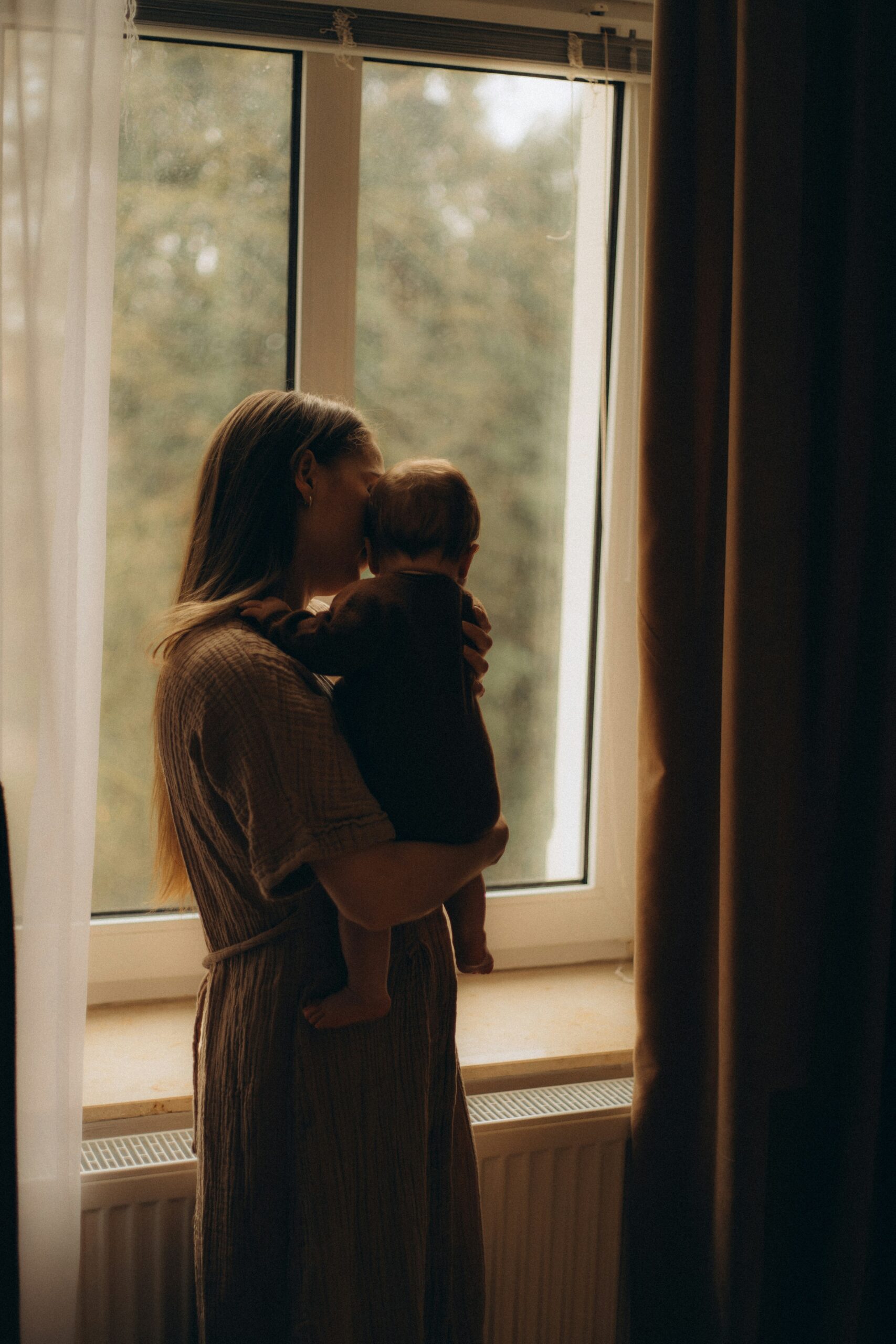
You just had a baby.
And from the moment that baby arrived, people started telling you how to feel about it.
“Enjoy every moment. It goes so fast.”
“This is the best time of your life.”
“You must be so happy.”
Everyone means well. But if you’re sitting in the middle of sleepless nights, touched-out afternoons, and a body that doesn’t feel like yours anymore, that kind of advice doesn’t feel like comfort. It feels like pressure.
And when your insides don’t match what everyone says you should be feeling, it’s easy to start wondering: What’s wrong with me?
Nothing is wrong with you. But there is something worth talking about.
What Motherhood Actually Feels Like
There’s a version of new motherhood that gets a lot of airtime. The glowing mom, the perfect newborn, the instant rush of love that makes everything feel complete.
And for some women, parts of that are real. But for a lot of women, the early days also include anxiety that won’t let you rest even when the baby is sleeping. A sense of numbness, like you’re watching your life from the outside. Irritability and mood swings that catch you off guard. Guilt for not feeling happier. A quiet grief for the life you had before. Loneliness, even when you’re never actually alone.
These things are incredibly common. But because they don’t fit the story we’re told, a lot of women suffer through them in silence, convinced they’re failing at something that should come naturally.
Why “Enjoy Every Moment” Makes It Worse
When we tell new mothers to enjoy every moment, we’re sending a message underneath it: this should all feel good. And when it doesn’t, when the moment feels hard or exhausting or scary, that message becomes something you can’t live up to.
So you smile and say you’re fine. You push through. You assume everyone else is managing and something must be off with you.
The pressure to perform happiness during one of the most intense transitions of your life doesn’t protect you. It just makes you feel more alone.
What’s Actually Going On
Becoming a mother is one of the biggest identity shifts a person can go through. Researchers have a word for it: matrescence, the process of becoming a mother, which is as disorienting as adolescence.
Your body just went through something enormous. Your hormones are all over the place. Your sleep is fragmented. Your relationships are shifting. Your sense of who you are is being completely reorganized.
Of course that’s hard. Of course it’s not all joy.
Postpartum anxiety and depression are also far more common than most people realize. Postpartum anxiety affects up to 20% of new mothers, and many of them never get support because they don’t recognize what they’re experiencing, or they’re too busy holding it together to ask.
When It Might Be More Than “New Mom Stress”
There’s a difference between the normal hard of new motherhood and something that needs more support. It might be worth talking to someone if you feel anxious almost constantly even when things are calm, if you’re having intrusive thoughts that won’t go away, if you feel detached from your baby or from yourself, if you can’t sleep even when you have the chance, or if you feel hopeless or like you’ve made a terrible mistake.
If any of that resonates, it’s not a reflection of what kind of mother you are. It’s a signal that you need support.
What Therapy Can Actually Do
Therapy during the postpartum period isn’t about fixing you. It’s about giving you a space where you don’t have to perform okayness.
Where you can say this is really hard without someone telling you to cherish it.
Where you can grieve the parts of your old life you miss, without feeling guilty about it.
Where you can start to feel like yourself again.
A lot of new mothers find that just having somewhere to say what’s actually going on, without judgment, without advice, without being told how they should feel, is exactly what they needed.
You don’t have to be in crisis to deserve that. You just have to be struggling. That’s enough.
You’re Allowed to Find This Hard
Motherhood can be meaningful and exhausting at the same time. Those things aren’t in conflict.
You don’t have to enjoy every moment.
You just have to get through them. And it’s okay to ask for help doing that.
I’m Rivkie Yifat, LCSW, a therapist in Cedarhurst, NY working with women across Long Island and online throughout New York State. I specialize in supporting women through the postpartum period and major life transitions.
If you’re struggling after having a baby, or even if you’re just not sure what you’re feeling, reach out today. You don’t have to figure this out alone.